

Healthcare facilities depend on accurate, accessible information to keep daily operations moving smoothly. While every organization needs reliable recordkeeping, the right approach can vary based on facility size, staff responsibilities, patient populations, available space, and established workflows. A system that works well in a small medical office may not meet the needs of a large hospital department or senior living community.
That is why some tips for tailoring your filing and recordkeeping system can provide a useful starting point for evaluating how records are organized, stored, identified, and accessed. Instead of forcing employees to adapt to a generic system, facilities can build recordkeeping processes around how their teams actually work.
1. Start by Evaluating Current Workflows
Before changing a filing system, consider how information currently moves through the facility. Identify who creates records, who needs access to them, where they are used, and where they are ultimately stored.
This evaluation can reveal unnecessary steps or organizational inconsistencies that make information harder to manage. Understanding the existing workflow also makes it easier to tailor improvements to real operational needs rather than making changes simply for the sake of reorganizing.
2. Organize Records Around How Staff Use Them
An effective filing system should reflect the way employees search for and use information. Depending on the healthcare environment, records might be organized by patient name, identification number, department, date, record type, or another established category.
The best organizational structure is one that allows authorized staff to locate the information they need efficiently and consistently. When filing logic matches everyday workflows, employees spend less time navigating the system and can focus more attention on their primary responsibilities.
3. Create Consistent Identification Standards
Consistency is essential when multiple employees interact with the same recordkeeping system. Labels, tabs, binder identification, naming conventions, and filing locations should follow clearly established standards throughout the relevant department or facility.
Visual identification can make physical records easier to distinguish at a glance. Consistent labeling also reduces the likelihood that individual staff members will develop separate organizational methods that become difficult for others to follow.

4. Use Color to Support Quick Recognition
Color can add another visual layer to a well-organized filing system. Different colors may be assigned to departments, record categories, sections, years, or other classifications that make sense within a facility's established processes.
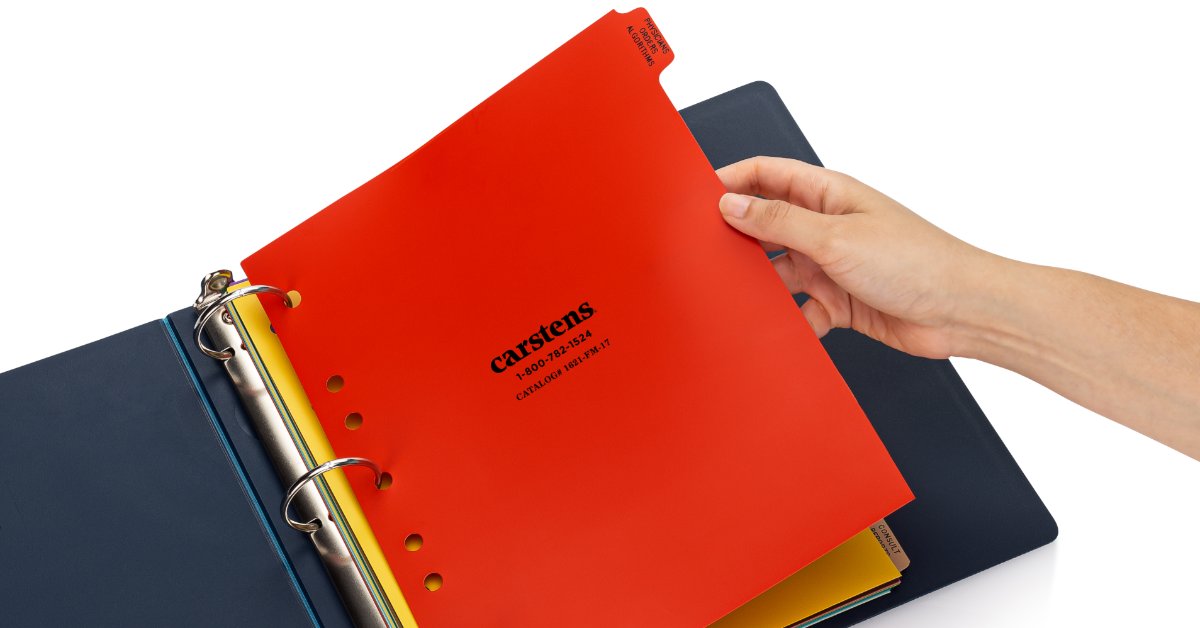
The key is to use color consistently rather than simply adding it for visual variety. Tools such as custom medical chart dividers can help separate information into clearly defined sections while supporting an organizational structure tailored to the facility's needs.
5. Match Storage to Record Volume
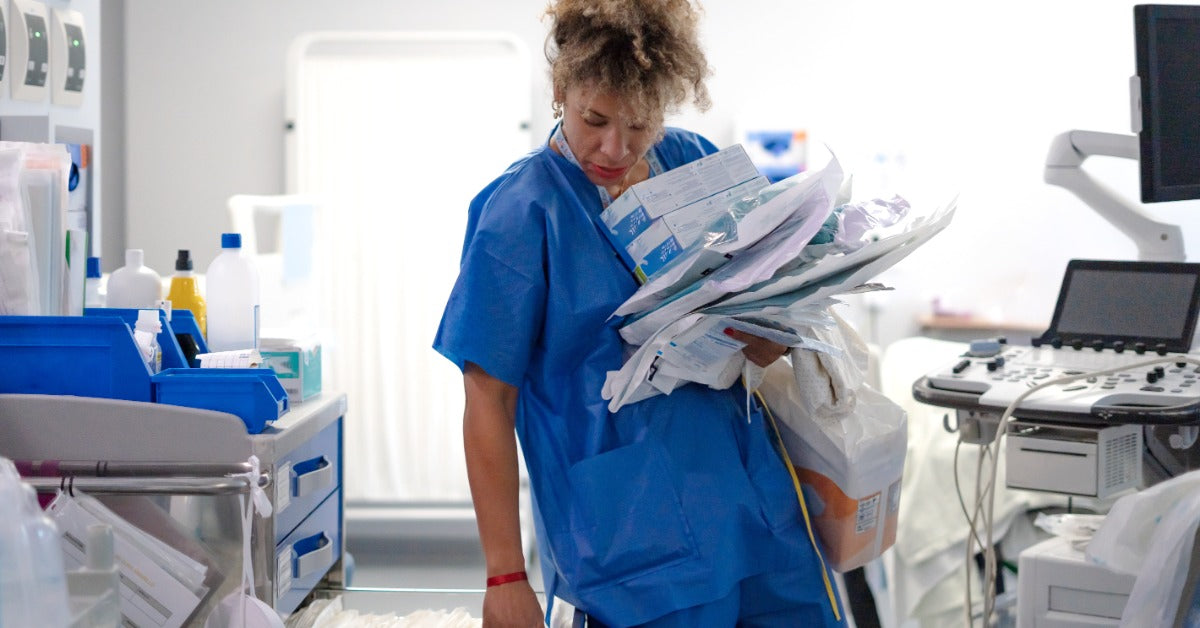
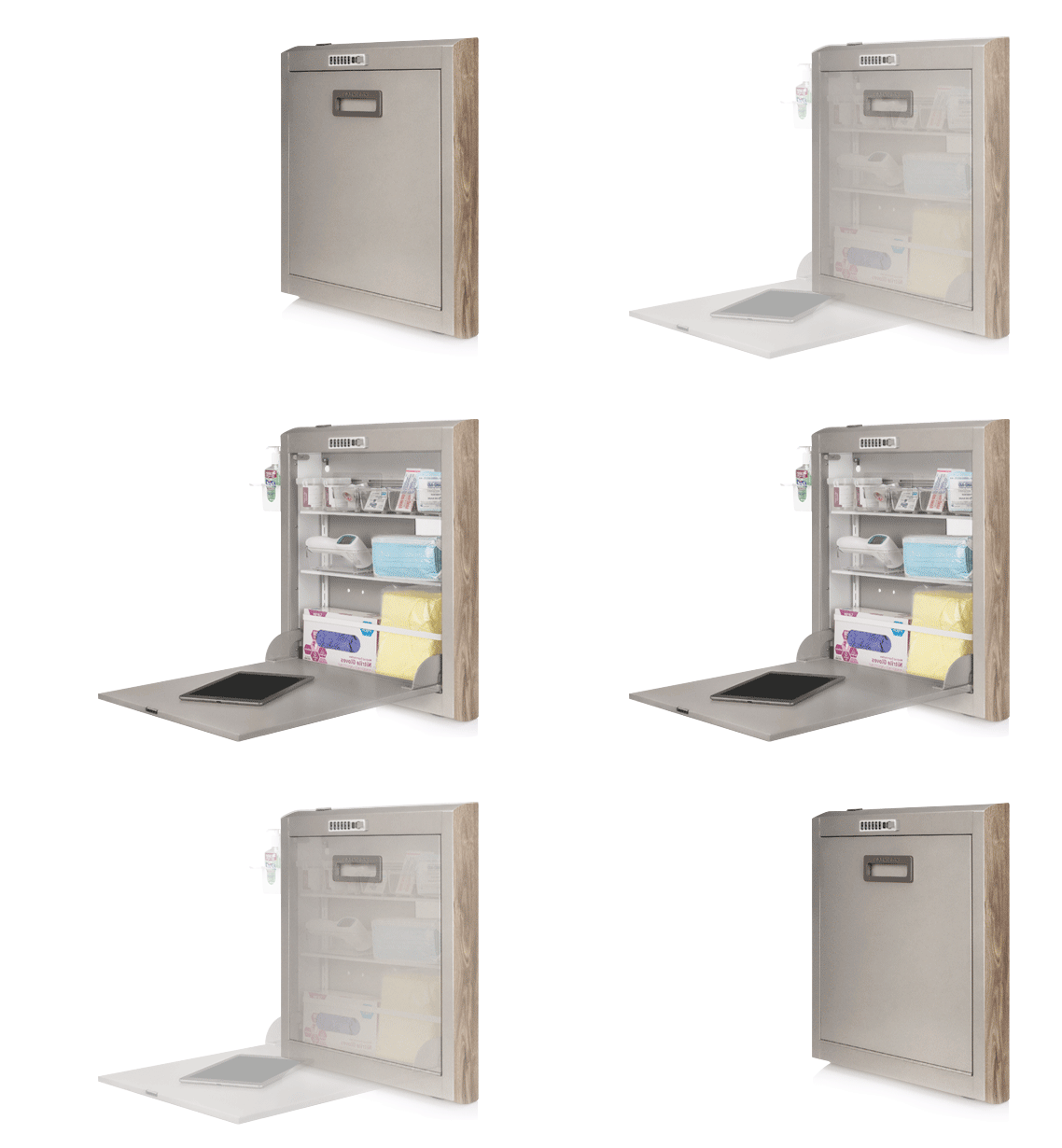
Storage requirements can change considerably depending on the volume and type of physical documentation a facility manages. A small practice may need relatively compact filing areas, while a busy healthcare department could require larger-capacity systems that accommodate frequent record access.
Consider both current volume and reasonable future needs when planning storage. An overcrowded system can become difficult to navigate, while excessive unused storage may take up valuable workspace that could be used more effectively.
6. Consider Where Records Are Accessed
Storage location is just as important as storage capacity. Frequently referenced materials should generally be positioned where authorized employees can access them conveniently within the normal flow of work.
Records that are used less often may be suitable for more centralized storage. Tailoring locations according to frequency of use can reduce unnecessary movement while keeping work areas organized and ensuring that important documentation remains available when needed.
7. Account for Hybrid Recordkeeping
Many healthcare organizations work with a combination of electronic and physical documentation rather than relying exclusively on one format. A customized recordkeeping strategy should account for how these systems interact.
Facilities can establish clear processes for determining what belongs in a physical record, what is maintained electronically, and how staff should navigate between the two. The goal is to create complementary workflows that minimize confusion and help employees understand where specific information should be located.
8. Build Flexibility Into the System
Healthcare workflows do not remain static. Patient volumes, staffing patterns, documentation requirements, departmental responsibilities, and facility layouts can change over time.
A filing system should be adaptable enough to accommodate those changes without requiring a complete redesign. Modular storage, adjustable organizational categories, replaceable identification materials, and flexible binder configurations can make it easier to update a system as operational needs evolve.
9. Keep Frequently Used Information Easy to Navigate
Some records contain a significant amount of information, making internal organization especially important. Staff should not have to search through an entire chart every time they need to locate a commonly referenced section.
Dividers, tabs, sheet protectors, pockets, and other organizational components can create a predictable structure within physical records. When the same types of information appear in consistent locations, navigating a chart can become more intuitive for employees who regularly work with it.

10. Make Organization Standards Easy to Follow
Even a carefully designed filing system can become inconsistent if its rules are too complicated. Staff members should be able to understand where documents belong and how records should be identified without relying on individual interpretation.
Straightforward standards can also make onboarding easier for new employees. Clear procedures, consistent categories, and recognizable visual cues help establish a shared approach to recordkeeping across a department and reduce variations that can accumulate over time.
11. Review the System Regularly
A filing system that worked well several years ago may no longer reflect current workflows. Periodic reviews provide an opportunity to identify crowded storage areas, outdated categories, inconsistent labeling, or unnecessary steps.
Feedback from the employees who interact with records every day can be particularly valuable during these evaluations. Their experience can highlight practical issues that may not be obvious from a management perspective and help determine where targeted adjustments could improve usability.
Creating a Recordkeeping System Around Your Facility
The most effective recordkeeping approach is not necessarily the most complex one. It is the system that supports the people using it while maintaining clear, consistent organization.
These methods to customize your filing and recordkeeping system emphasize the importance of matching organizational choices to real healthcare workflows. From storage capacity and record location to visual identification and internal chart organization, each element can contribute to a more intuitive working environment.
Thoughtful customization also allows facilities to respond as their needs change. Instead of treating recordkeeping as a fixed administrative process, healthcare organizations can view it as part of the broader caregiving environment—one that should support efficient work, straightforward access to information, and productive interactions between caregivers and patients.