
Healthcare environments move quickly, and providers need tools that help them keep pace with patient needs, documentation requirements, and team communication. Technology has become a central part of patient care, but the way technology is delivered throughout a facility can significantly impact efficiency and caregiver satisfaction. One solution that continues to improve healthcare workflows is the use of mobile computer carts.
From hospitals and dialysis centers to senior living communities and specialty clinics, mobile workstations give caregivers immediate access to patient records and digital tools without requiring them to stay tied to a fixed station. Benefits of mobile computer carts for healthcare providers include improved flexibility, faster communication, and more efficient patient interactions. These workstations are designed to support caregivers as they move through busy clinical environments while helping reduce unnecessary interruptions during care delivery.
Supporting Point-of-Care Documentation
One of the most valuable advantages of mobile computer carts is the ability to complete documentation at the patient bedside. Instead of taking handwritten notes and updating records later, providers can enter information in real time. This process helps reduce documentation delays and minimizes the risk of transcription errors.
Real-time charting also supports more accurate communication among care teams. When patient information is updated immediately, physicians, nurses, and specialists can access the latest details without waiting for records to be transferred or entered later in the day. Faster access to current information can improve decision-making and coordination across departments.
Point-of-care documentation also benefits patients. Caregivers spend less time moving between nursing stations and patient rooms, which allows for more direct interaction during visits. Patients often feel more informed and engaged when providers review records and discuss care plans in front of them rather than away from the bedside.
Improving Workflow Efficiency Throughout Facilities
Healthcare providers cover significant distances during a typical shift. Walking back and forth to stationary workstations can consume valuable time that could otherwise be spent caring for patients. Mobile computer carts help eliminate some of this unnecessary movement by bringing technology directly to caregivers wherever they are working.
This mobility becomes especially useful in larger healthcare facilities where teams may move between multiple departments throughout the day. Nurses can document medications immediately after administration, physicians can review imaging results during rounds, and therapists can update treatment notes without leaving patient areas.
The flexibility of mobile workstations also helps facilities adapt to changing workloads. Providers can reposition carts as needed during busy periods, patient surges, or temporary room changes. Unlike fixed workstations, mobile units can easily support evolving care environments without requiring major infrastructure adjustments.
Healthcare organizations focused on operational improvements often recognize that reducing small inefficiencies can lead to meaningful gains over time. Mobile carts support that effort by helping caregivers work more fluidly and with fewer interruptions.

Enhancing Caregiver Comfort and Ergonomics
Long shifts and repetitive physical strain are common challenges in healthcare settings. Equipment that supports ergonomic movement and positioning can help reduce discomfort and improve the caregiver experience over time.
Many mobile computer carts are designed with adjustable features that accommodate different users and work preferences. Height-adjustable surfaces allow caregivers to alternate between sitting and standing positions while documenting or reviewing records. These adjustments help promote better posture and reduce physical fatigue during extended shifts.
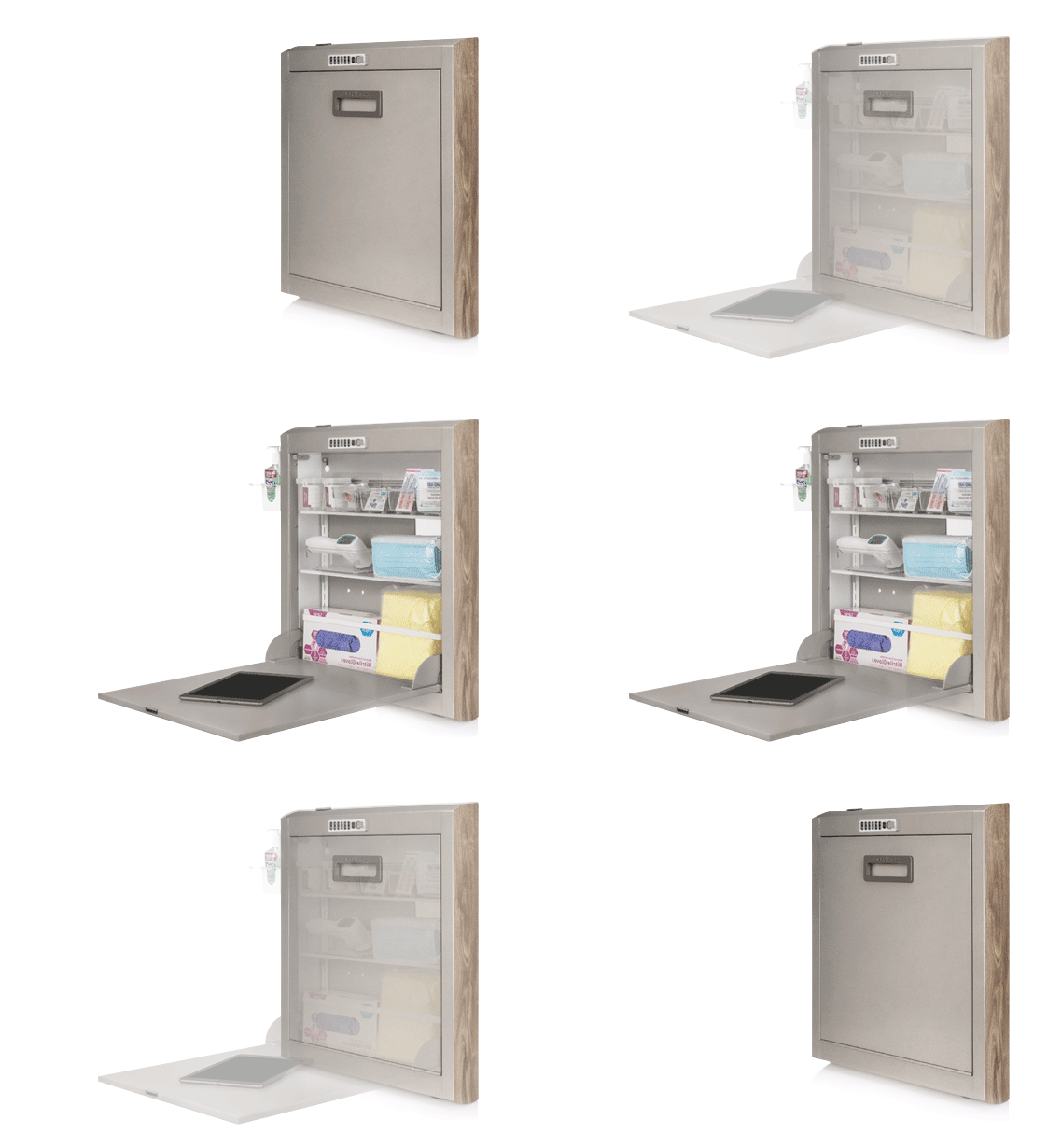
Some facilities also incorporate solutions like a mobile adjustable desk configuration within their workstation setups to create more flexible and ergonomic care environments. These adaptable designs allow providers to work comfortably in patient rooms, hallways, and treatment areas without compromising workflow efficiency.
Ergonomic improvements are not only beneficial for staff comfort. Reducing physical strain may also help support productivity and minimize workplace injuries associated with repetitive movements or poor workstation positioning.
Increasing Flexibility Across Multiple Care Settings
Healthcare providers work in a wide range of environments, each with unique workflow demands. Mobile computer carts can support flexibility across acute care hospitals, outpatient clinics, assisted living communities, and specialty treatment centers.
In hospitals, carts allow nurses and physicians to move efficiently between patient rooms while maintaining secure access to electronic health records. In dialysis centers, providers can document treatment details directly at the chairside. In senior living communities, caregivers may use mobile workstations to update care plans while remaining accessible to residents.
The adaptability of these workstations makes them useful for both permanent and temporary care spaces. Facilities can quickly reposition carts during renovations, overflow situations, or evolving operational needs. This flexibility helps organizations remain responsive without sacrificing access to technology.
Healthcare systems increasingly prioritize adaptable solutions that can grow alongside changing patient volumes and care delivery models. Mobile computer carts support that goal by functioning across multiple departments and care settings.
Supporting Better Patient Engagement
Technology should support patient interaction rather than distract from it. Mobile workstations can help caregivers stay present during patient conversations by allowing them to access information without leaving the room.
When providers review test results, medication lists, or care plans alongside patients, communication often becomes more collaborative. Patients may feel more involved in their treatment decisions when they can see information being updated and discussed in real time.
Bedside access to records can also help improve education efforts. Providers can answer questions immediately, verify treatment instructions, and ensure patients understand discharge information before leaving the facility.
Improved communication supports patient confidence and may contribute to better overall experiences during care visits. In environments where patient satisfaction remains an important operational focus, tools that encourage stronger provider-patient interaction can offer meaningful value.

Helping Maintain Organized Clinical Environments
Organization plays an important role in healthcare efficiency and safety. Mobile computer carts often include integrated storage, cable management, and equipment organization features that help reduce clutter in busy care areas.
Well-designed carts allow providers to keep devices, scanners, keyboards, and supplies accessible while maintaining a clean and professional workspace. Organized equipment can help streamline workflows by reducing time spent locating tools or managing tangled cables.
In some facilities, mobile workstations also support infection prevention efforts by making surfaces easier to clean and reducing unnecessary shared touchpoints. Compact and maneuverable designs allow carts to move through patient areas without creating congestion or disrupting workflows.
Maintaining organized clinical environments supports both staff productivity and patient perceptions of care quality. Clean, efficient workspaces help reinforce professionalism and operational consistency across healthcare facilities.
Adapting to Evolving Healthcare Technology
Healthcare technology continues to evolve rapidly, and facilities need workstation solutions that can adapt alongside new systems and workflows. Mobile computer carts provide a flexible platform for integrating electronic health records, telehealth tools, barcode medication systems, and other digital applications.
As providers increasingly rely on connected technology throughout the care process, mobile access becomes even more important. Workstations that support mobility allow healthcare organizations to implement technology improvements without restricting caregivers to specific locations.
Future healthcare environments will likely continue emphasizing flexible workflows, real-time communication, and patient-centered care delivery. Mobile workstation solutions align with those priorities by helping providers remain connected while moving throughout the facility.
Facilities that invest in adaptable equipment today may find it easier to support future operational and technological changes without requiring large-scale redesigns or workflow disruptions.
The Lasting Value of Mobile Workstations in Healthcare
Healthcare organizations are constantly balancing patient care demands, operational efficiency, and staff satisfaction. Mobile computer carts help support all three by bringing technology directly to the point of care while improving workflow flexibility across clinical environments.
The advantages of mobile workstation carts for medical staff extend beyond simple mobility. These solutions support faster documentation, improved communication, ergonomic comfort, and stronger patient engagement throughout the care experience. As healthcare facilities continue modernizing workflows, mobile technology tools remain an important part of creating responsive and efficient care environments.
Providers need equipment that supports their movement, adapts to changing demands, and helps simplify daily responsibilities. Mobile computer carts continue to offer practical value by helping caregivers stay connected, organized, and focused on delivering quality patient care.